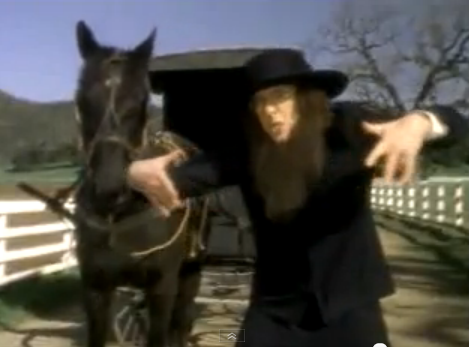
I mentioned to some of you that Wednesday was double-Palindromic Day (11-1-11 and 11-02-2011); the second only occurs every twenty thousand years, I've heard.
What I forgot to mention was one of my favorite Weird Al videos. Fellow blogger Pete Scribner posted a link to the video on his blog...go watch it. It's funny, if you like ironic humor.
So Weird Al is necessary to fully enjoy the double-Palindrome day!
(I might add- Weird Al often bases his songs on oldies and recent pop hits...this one is no different. For those of you under the age of about 40, he's spoofing a 60s singer named Bob Dylan. Here's the video of the Dylan song that Weird Al took 'Bob' from. Here's the video of a Dylan song that sounds much like Yankovic's Bob.)
You may not appreciate Weird Al's work as much as I do, but you can't deny he's a creative genius. (Each of these link to a video on YouTube.)
Weird Al as MJ in 'Eat It'-
Weird Al as 'Gump'-
Weird Al as a contestant in, 'I Lost on Jeopardy'-
Weird Al as Obi-Wan Kenobi in 'The Saga Begins' (one of his most creative works)-
Weird Al as an Amish in 'Amish Paradise'-
Weird Al as MJ in 'Fat'-
Sola gratia, sola fide, solus Christus, sola scriptura, soli Deo gloria!
Showing posts with label language. Show all posts
04 November 2011
15 April 2011
Moralistic Deism, or Deistic Moralism?
In listening to the panel discussion at The Gospel Coalition 2011, something struck me as of minor importance. It has to do with Christian Smith's labeling of much of current religiosity as 'moralistic therapeutic deism'.
I fully agree with Smith's analysis of the religious views of many of today's teens and young people. Their outlook is mostly moralistic, and its focus is therapeutic. In this, their view of God moves from theistic to deistic. That is, they view God as being detached, impersonal, uninvolved and aloof from their lives, with the exception of when they need help or feel bad about themselves.
The point of minor importance that came to mind was the grammar of the descriptive title, moralistic, therapeutic deism.' I think it should be re-phrased as, 'deistic therapeutic moralism.'
Why? Well, grammatical construction would indicate the last word (a noun) is the primary word, and is modified by the first two (adjectives). So, in Smith's construction, the teens are primarily deists, who are both moralistic and therapeutic in character. This isn't the best construction, in my opinion. I don't think most American teens are primarily deistic, I think they become deistic by nature of their emphasis on detached therapeutic application of God, and in this, they are primarily moralists. Thus, the better construction, I think, is deistic therapeutic moralism.
This isn't enough to lose sleep over, and certainly not worth an argument, though discussion would be useful.
What do you think?
I fully agree with Smith's analysis of the religious views of many of today's teens and young people. Their outlook is mostly moralistic, and its focus is therapeutic. In this, their view of God moves from theistic to deistic. That is, they view God as being detached, impersonal, uninvolved and aloof from their lives, with the exception of when they need help or feel bad about themselves.
The point of minor importance that came to mind was the grammar of the descriptive title, moralistic, therapeutic deism.' I think it should be re-phrased as, 'deistic therapeutic moralism.'
Why? Well, grammatical construction would indicate the last word (a noun) is the primary word, and is modified by the first two (adjectives). So, in Smith's construction, the teens are primarily deists, who are both moralistic and therapeutic in character. This isn't the best construction, in my opinion. I don't think most American teens are primarily deistic, I think they become deistic by nature of their emphasis on detached therapeutic application of God, and in this, they are primarily moralists. Thus, the better construction, I think, is deistic therapeutic moralism.
This isn't enough to lose sleep over, and certainly not worth an argument, though discussion would be useful.
What do you think?
13 October 2010
Wednesday Wisdom- 'Missional'...what does it mean?
I've heard the term missional thrown around for a number of years now, and most of the time I hear it, context is the only way to try to figure out what the author means by it. I've interacted on other blogs with authors, asking for definitions of words at times, and often missional is one of the words I want defined. I'm usually ignored.
A few days ago, I ran across this blog post by Ryan Kelly over on the Gospel Coalition web site. It is by far the most helpful article I've read on missional and missionalarity (that's a new word I just made up...much like others use words in new ways).
I hope you find this as helpful as I did. Use the hyperlinks...there's a lot more additional info buried in those.
A few days ago, I ran across this blog post by Ryan Kelly over on the Gospel Coalition web site. It is by far the most helpful article I've read on missional and missionalarity (that's a new word I just made up...much like others use words in new ways).
I hope you find this as helpful as I did. Use the hyperlinks...there's a lot more additional info buried in those.
30 September 2010
Not 'Just Sayin'
I've noticed a new fad lately. It's probably not all that new, but things move slowly around here. The fad is to use the phrase, "just sayin'" after a remark. The remark would usually be considered rude or inappropriate. Then the speaker tags it with, "just sayin'" and everything seems fine.
It's not fine.
People, saying, "just sayin'" after a rude remark does not make the remark any less rude!!
It's like the much older practice, here out west, of adding, "ole" before an insult to make it a non-insult. If you called somebody "that ole poker cheat", everybody laughed. If you called him a "poker cheat", you got shot. The difference between then and now is, the 'ole' was added to the front of the expression to indicate that no offense was intended. The 'just sayin' is added after everything's been said, and then only to cover one's tracks after the damage is done.
Good grief. If you are one of the 'just sayin' folks, grow the heck up and quit acting like a fourth-grader!
Just sayin'.
It's not fine.
People, saying, "just sayin'" after a rude remark does not make the remark any less rude!!
It's like the much older practice, here out west, of adding, "ole" before an insult to make it a non-insult. If you called somebody "that ole poker cheat", everybody laughed. If you called him a "poker cheat", you got shot. The difference between then and now is, the 'ole' was added to the front of the expression to indicate that no offense was intended. The 'just sayin' is added after everything's been said, and then only to cover one's tracks after the damage is done.
Good grief. If you are one of the 'just sayin' folks, grow the heck up and quit acting like a fourth-grader!
Just sayin'.
02 August 2010
'Christian' versus 'Christ-follower'
I've been noticing a subtle change in wording on a good number of people's blogs and profile pages...instead of calling themselves a Christian, they call themselves a Christ-follower. I have no idea where this got started, and I'd love to know. If any of you reading this have a source, please drop me a line and let me know.
jbboren@gmail.com
I haven't thought this through completely, but on the surface at least, I have a bit of a problem with the new wording. I know it sounds kinda cool, and it is certainly a contemporary way to express a religious orientation, but I'm not sure it means what many people seem to think.
Here's an example from scripture- both Simon Peter and Judas Iscariot were Christ-followers. Jesus called Judas to follow him, and he did. He called Peter, and he also followed. Yet Judas (as you know if you read the story) was never a Christian. Peter was. Judas was lost; Peter saved. One was sad he got caught, the other saddened by his lack of faith. So one can be called a Christ-follower and not be a Christian. I don't think that's the meaning most folks intend to express when they refer to themselves as a Christ-follower. (Though, as an aside, the term may have a lot of utility, since there are so many folks who attend church that are apparently not Christians.)
The Bible refers to Christians as, well, Christians. Acts 11:26 says the disciples in Antioch were the first to be called Christians. I don't think that verse is anecdotal or without importance in the scriptural narrative. I don't see any reference to Christ-followers in the New Testament. I do see Jesus telling folks to follow him, and I don't have any problem with the language used as a verb (command). I just don't see the need to use it as a noun (description). The word Christian means little Christ. This is not a reference to some kind of inherent deity in any believer, but rather to the idea of a believer in Christ being an understudy who is attempting to typify or embody Christ-likeness in their own life. The Biblical term for this process is sanctification. We can follow someone without ever trying to become like them. I follow Weird Al Yankovic, because I think his parodies are funny and I think he's a genius at what he does, not to mention he's a very talented musician. But (no offense, Al) I don't want to be like him. I don't want to be a Weird Al Mini-me. I do want to think, talk, act, love, hate, see, hear, etc., like Christ. Thus I am a Christian (a little Christ), not merely a Christ-follower.
I don't know that any of this is a really big deal, but as has been said so often, words mean things. Certainly, in the gospel itself, the importance of words is not capable of being overstated. Over time, we tend to wreck our language by the overuse of superlatives (everything is awesome even when its not). We also tend to water language down by shifting definitions, almost always away from the precise toward the general (ask someone what radical means, then look it up in the OED and you'll see what I mean). This is never helpful to a culture; moving from the concise to the abstract always results in a loss of information. Yes, we have too much information, and losing some of it wouldn't be a bad thing, but we need to keep the good and dump the bad, and that's not what happens when we lose our language.
I don't mean to disparage any who call themselves Christ-followers. I just want to make sure I send the right message by what I call myself.
As for me, I'll stick to the Biblical term, Christian.
jbboren@gmail.com
I haven't thought this through completely, but on the surface at least, I have a bit of a problem with the new wording. I know it sounds kinda cool, and it is certainly a contemporary way to express a religious orientation, but I'm not sure it means what many people seem to think.
Here's an example from scripture- both Simon Peter and Judas Iscariot were Christ-followers. Jesus called Judas to follow him, and he did. He called Peter, and he also followed. Yet Judas (as you know if you read the story) was never a Christian. Peter was. Judas was lost; Peter saved. One was sad he got caught, the other saddened by his lack of faith. So one can be called a Christ-follower and not be a Christian. I don't think that's the meaning most folks intend to express when they refer to themselves as a Christ-follower. (Though, as an aside, the term may have a lot of utility, since there are so many folks who attend church that are apparently not Christians.)
The Bible refers to Christians as, well, Christians. Acts 11:26 says the disciples in Antioch were the first to be called Christians. I don't think that verse is anecdotal or without importance in the scriptural narrative. I don't see any reference to Christ-followers in the New Testament. I do see Jesus telling folks to follow him, and I don't have any problem with the language used as a verb (command). I just don't see the need to use it as a noun (description). The word Christian means little Christ. This is not a reference to some kind of inherent deity in any believer, but rather to the idea of a believer in Christ being an understudy who is attempting to typify or embody Christ-likeness in their own life. The Biblical term for this process is sanctification. We can follow someone without ever trying to become like them. I follow Weird Al Yankovic, because I think his parodies are funny and I think he's a genius at what he does, not to mention he's a very talented musician. But (no offense, Al) I don't want to be like him. I don't want to be a Weird Al Mini-me. I do want to think, talk, act, love, hate, see, hear, etc., like Christ. Thus I am a Christian (a little Christ), not merely a Christ-follower.
I don't know that any of this is a really big deal, but as has been said so often, words mean things. Certainly, in the gospel itself, the importance of words is not capable of being overstated. Over time, we tend to wreck our language by the overuse of superlatives (everything is awesome even when its not). We also tend to water language down by shifting definitions, almost always away from the precise toward the general (ask someone what radical means, then look it up in the OED and you'll see what I mean). This is never helpful to a culture; moving from the concise to the abstract always results in a loss of information. Yes, we have too much information, and losing some of it wouldn't be a bad thing, but we need to keep the good and dump the bad, and that's not what happens when we lose our language.
I don't mean to disparage any who call themselves Christ-followers. I just want to make sure I send the right message by what I call myself.
As for me, I'll stick to the Biblical term, Christian.
Subscribe to:
Posts (Atom)